Does HackerRank Actually Detect Cheating? What's Changed in 2026
HackerRank's proctoring catches some cheating signals and misses others. The deeper problem is not the gaps in the detection layer — it is that detection is the wrong primary strategy when AI is part of how engineers actually work.
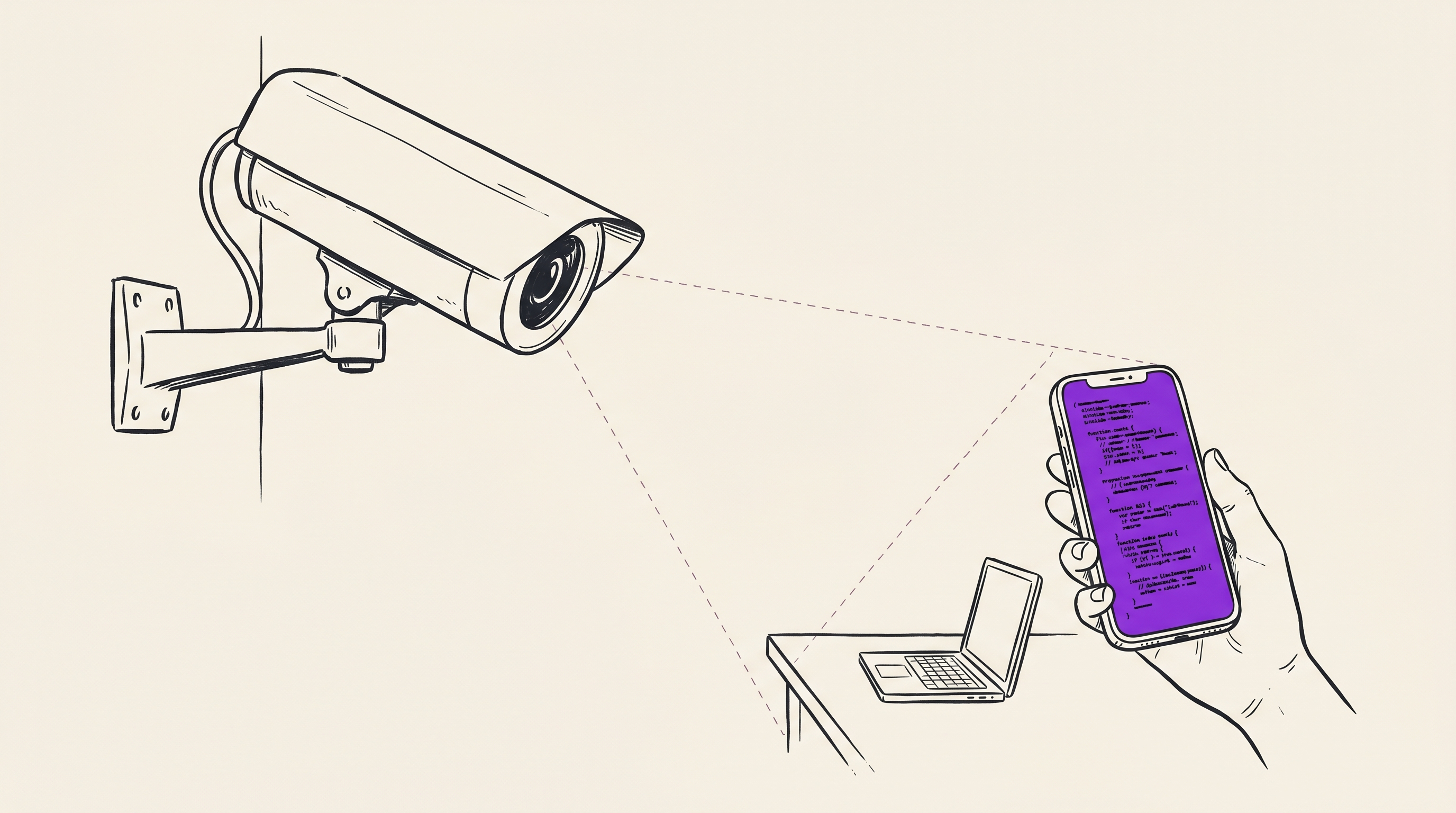
The question hiring teams ask most often in 2026 is some variation of: does HackerRank actually detect cheating? It is the right question to ask. It is also the wrong question to make a hiring decision around.
HackerRank's proctoring layer catches a real set of signals. It also misses a larger set. The deeper issue, the one this post is really about, is that detection has become a losing strategy in a world where AI is the default writing instrument. What changed in 2026 is not so much HackerRank's detector. What changed is the cost-benefit math of trying to detect AI at all.
What HackerRank's proctoring actually flags
HackerRank's anti-cheating stack is one of the more mature in the assessment-platform category. As of 2026, the publicly documented signals it tracks include:
Tab-switching and focus-loss events. The browser-level detector logs every time a candidate leaves the interview tab or exits full-screen. Frequent or long focus-loss events get flagged for reviewer attention.
Copy-paste tracking. Large pastes into the code editor are recorded and surfaced in the candidate report. A paste of 200+ lines that exactly matches a known open-source snippet is hard to miss.
Plagiarism scoring. Submitted code is compared against a large corpus of previously submitted solutions to HackerRank problems. High similarity scores trigger a plagiarism flag.
AI-similarity scoring. Added to the platform in the last two years, this scores submissions against patterns common in large language model outputs — formatting habits, comment styles, variable-naming conventions that ChatGPT and Claude tend to produce.
Webcam-based proctoring. On the premium proctoring tier, a webcam captures the candidate's face during the assessment. The system flags identity mismatches, multiple people in frame, and the candidate leaving the workspace.
These signals work. They will catch a candidate who pastes ChatGPT output wholesale into the editor, who keeps switching to another tab every two minutes, or whose code submission scores 90% similar to a known model output. For obvious cheating in a constrained format, the detection layer does its job.
What it does not see
The detector's field of view is the browser tab and, on premium tiers, what the webcam can capture. Both of those surfaces have well-understood blind spots.
A second device is invisible. A phone next to the laptop, a tablet on the desk, a second monitor with a chat interface open. Nothing the browser-level detector sees changes when the candidate is reading from another screen. Webcam proctoring catches the most obvious version (eyes darting to another monitor) but misses the careful version (phone held just below the camera frame, brief glances).
Typed-in AI output is invisible. If the candidate reads a model's response from a phone and types it into the HackerRank editor character by character, there is no paste event. The plagiarism scorer might catch verbatim output that matches a known model pattern. It will not catch output the candidate paraphrased as they typed it.
Voice-dictated prompts are invisible. Tools like Cluely and Interview Coder were built explicitly to defeat browser-based proctoring on platforms including HackerRank. They run on a second device, accept voice prompts, and surface answers in a way the proctored browser cannot detect. These tools are not theoretical — they are publicly available and actively used.
A candidate using AI well is invisible. The deepest blind spot is not technical. It is that the detector is designed to catch one thing — that a candidate used AI — and cannot distinguish between two very different scenarios. One candidate prompts the model to generate a solution, accepts it blindly, and submits. Another candidate prompts the model, identifies a subtle bug in the output, rewrites the critical section, and ships better code than they could have written alone. The detector flags both as "AI usage" and grades the second candidate the same as the first. In production, those are very different engineers. Your interview should know the difference.
The arms race that cannot be won
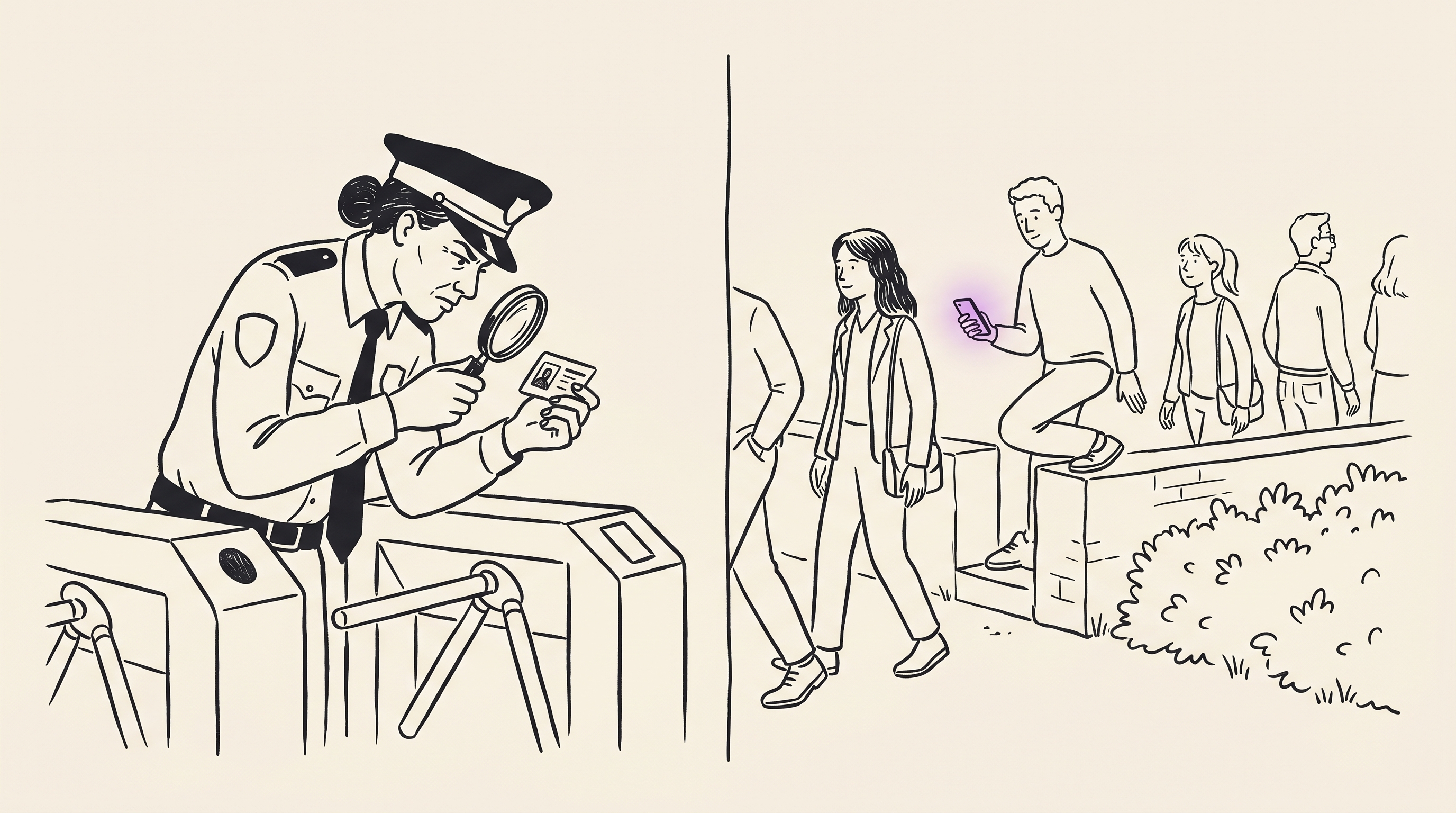
I covered this dynamic in detail in The AI Interview Arms Race. The short version: any detection-based system is in a race where it has to win every time and the candidate side only has to win once. Each iteration of detection improves the catch rate. Each iteration of evasion tools narrows the gap again. The detector chases the evader, and the evader stays one step ahead by definition — because the evader is operating on a different device the detector cannot see.
The economics of the two sides are also asymmetric. A platform like HackerRank invests heavily in proctoring R&D and ships updates on quarterly cadences. A tool like Cluely or Interview Coder ships weekly, has a community of users sharing successful tactics, and benefits from every new model release that makes its output harder to fingerprint. The detector iterates against a corpus from six months ago. The evader iterates against last week.
Industry analysis suggests roughly 38% of technical interviews now trigger some kind of cheating flag, and the trajectory of that number is upward. At some point, a flag rate that high stops being a useful signal and starts being a noise floor. You cannot disqualify 38% of your candidate pool. You cannot ignore the flags either. You end up with reports nobody trusts and decisions nobody can defend.
What changed in 2026 specifically
Three things shifted this year that make the detection-first strategy harder to defend than it was even twelve months ago.
AI is now the default at work. The fastest-growing engineering orgs ship code with Copilot, Cursor, Windsurf, and Claude Code as standard tooling. Banning AI in the interview no longer mirrors the job; it actively misrepresents it. A candidate who passes a no-AI screen and then joins a team where every senior engineer ships with AI is being evaluated on a skill that does not transfer.
The strongest candidates are opting out. The same pattern I described in Why LeetCode Doesn't Work in the AI Era is showing up in HackerRank-style screens. Senior engineers with ten or fifteen years of experience will not spend a Saturday proving they can write a sorting algorithm from memory in a proctored browser when their actual job is to make architecture decisions with AI assistance. They take a different offer.
Detection vendors are explicit about the limits. Even HackerRank's own documentation has moved over the last year toward language about "risk indicators" and "reviewer guidance" rather than confident statements about catching AI. The category understands its own structural problem.
The alternative: evaluate AI collaboration, do not detect it
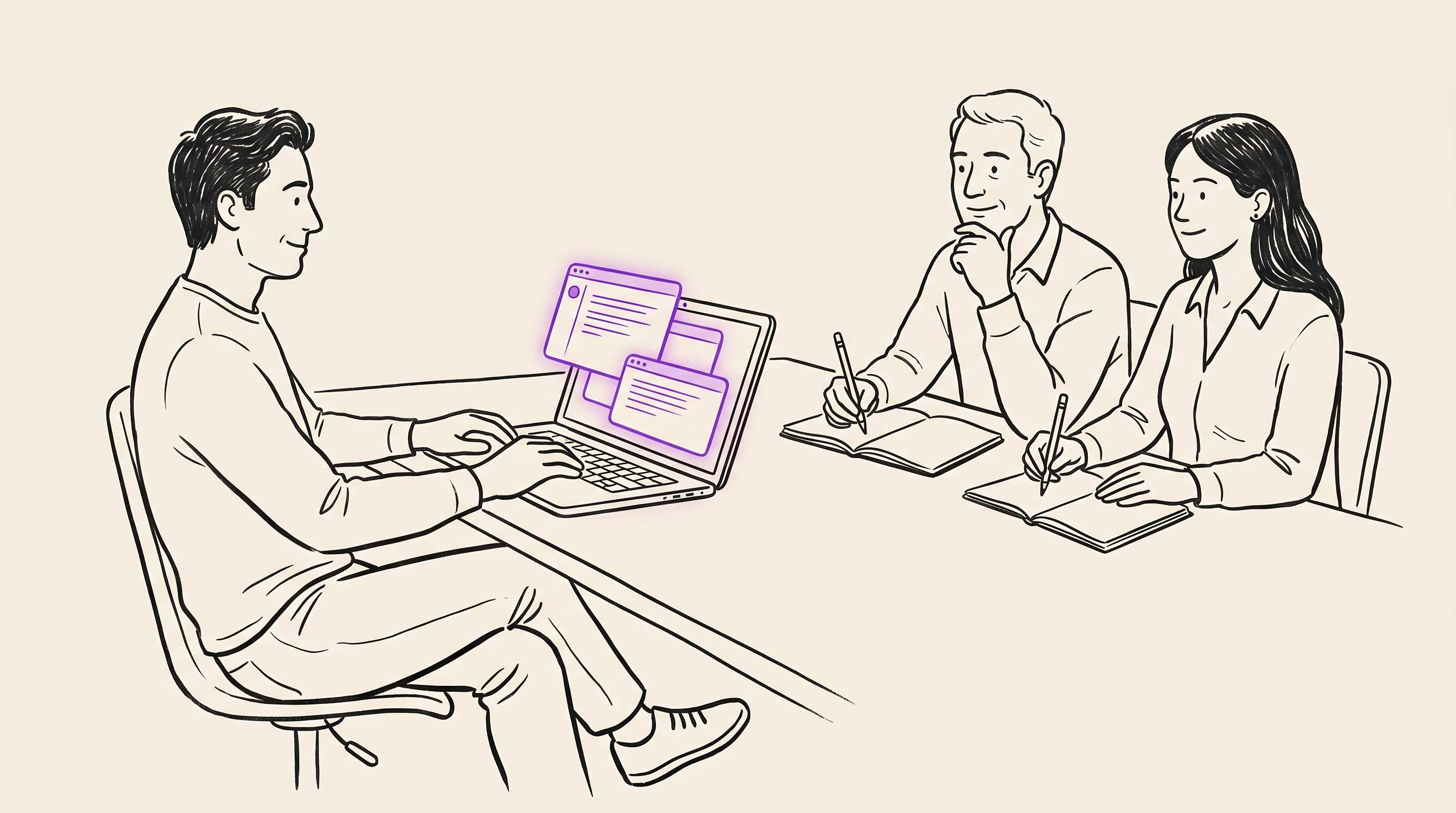
The shift that resolves all of this is to stop trying to detect AI use and start evaluating it as a core skill. Give the candidate a real IDE. Give them access to multiple AI models — Claude, GPT-4o, Gemini. Present a realistic engineering problem that has trade-offs, not a puzzle with a single correct answer. Capture the full session: every prompt, every accepted suggestion, every rejection, every iteration.
When the session is the data, you can score across dimensions that detection-based systems cannot reach. How does the candidate frame an ambiguous problem before they prompt? Do they drive the model with specific, well-scoped requests or do they ask vague questions and accept whatever comes back? When the model produces a wrong or incomplete answer, do they catch it? When you change a requirement halfway through, do they pivot cleanly or do they panic? Can they explain the trade-offs in their final solution under pressure?
This is the multi-dimensional framework we use at Eval-X. It produces evaluation data that predicts on-the-job performance better than a HackerRank pass/fail because it measures the actual job — which involves AI — rather than a constrained proxy that tries to exclude AI.
A direct head-to-head comparison of the two approaches is laid out in Eval-X vs HackerRank.
What to do if you are still using HackerRank
A few practical recommendations for teams that have HackerRank today and are not ready to switch platforms.
Treat proctoring flags as conversation starters, not disqualifiers. A flag rate of 38% is too high to use as a pass/fail signal. Use the flagged sessions as a prompt to do a follow-up live interview where the candidate walks through their solution and answers questions in real time. The follow-up conversation will tell you everything the proctor cannot.
Add a live follow-up regardless of flags. The strongest predictor of on-the-job performance is not whether the candidate passed the proctored screen. It is whether they can walk through their reasoning, defend their decisions, and adapt when you change the requirements in front of them. Build that step into your loop and weight it heavily.
Pilot the alternative in parallel. Run a small cohort of candidates through an AI-collaboration assessment alongside your HackerRank screen for a quarter. Compare the downstream outcomes — first-90-day performance, retention, manager ratings — and let the data tell you which screen predicted better. This is the cleanest way to make the decision without ideology.
Stop apologizing for the detection rate. Whatever you are doing on the proctoring side, do not pretend it catches what it does not catch. Candidates are smart, recruiters talk to each other, and an overconfident detection narrative damages trust on both sides of the table.
The honest answer to the question
Does HackerRank actually detect cheating in 2026? It detects some of it. It detects more of it than it did two years ago. The signals it surfaces are useful for compliance and reviewer guidance. The structural ceiling is real and the gap between what the detector sees and what the candidate can do off-screen is widening every quarter.
The deeper answer is that hiring teams asking this question are usually trying to solve a different problem. They want to know whether their interview process is producing reliable signal about engineering capability. The answer to that question does not depend on how good HackerRank's detector is. It depends on whether the format you are using maps to the job you are hiring for. In 2026, the job involves AI. The interview should too.
Sources
Frequently asked questions
Does HackerRank detect ChatGPT or Claude usage?
HackerRank's proctoring layer flags some AI usage signals — large pastes, focus-loss events when a candidate switches tabs, plagiarism-similar code submissions, and webcam-based behavior patterns on its premium proctoring tier. It does not detect AI use that happens off-screen (a second device, a phone next to the laptop, dictated prompts from another room) and it does not detect AI use that happens through the candidate's own typing rather than a paste. In practice this means many ChatGPT and Claude flows are invisible to the detector.
What does HackerRank's proctoring actually flag?
HackerRank's proctoring stack includes tab-switching detection, full-screen exit detection, copy-paste tracking, plagiarism scoring against a corpus of submitted solutions, webcam-based identity verification on premium tiers, and an AI-similarity score that compares submitted code against patterns common in large language model outputs. The signals are useful for compliance documentation but they detect symptoms of cheating in a constrained format, not the underlying behavior of a candidate who uses AI well.
Can candidates beat HackerRank's anti-cheating tools?
Yes, and the tools required to do it are widely documented. A second device with a chat interface open is invisible to the browser-level detector. Voice dictation of prompts to a phone never touches the browser. Tools like Cluely and Interview Coder were built specifically to defeat browser-based proctoring on platforms including HackerRank. The detection layer is in an arms race with these tools, and the arms race favors the candidate side because evasion only needs to work once per interview.
Did HackerRank update its cheating detection in 2026?
HackerRank has continued to iterate on its proctoring stack, adding AI-similarity scoring and stronger webcam-based behavior analytics in 2025–2026. The updates improve detection of obvious cases — wholesale paste of model output, candidates leaving the camera frame, identity mismatch — but the structural limits remain. The detector still cannot see off-screen tools, cannot evaluate the quality of a candidate's AI collaboration, and cannot tell the difference between a strong engineer using AI well and a weak one copying AI output verbatim.
Should I stop using HackerRank because of cheating concerns?
Not necessarily, but the question to ask is what HackerRank is solving for. If the goal is compliance documentation — proving you ran a standardized assessment with a reasonable proctoring layer — HackerRank still does that. If the goal is to evaluate engineering judgment in the AI era, detection is the wrong primary strategy. The better approach is to let candidates use AI and evaluate how they use it. That is a different platform category, not an upgrade to HackerRank.
What is the alternative to detection-based cheating prevention?
Evaluate AI collaboration as a core skill instead of trying to prevent it. Give candidates a real IDE with multi-model AI access (Claude, GPT-4o, Gemini), present a realistic engineering problem, and capture the full session — every prompt, every accepted suggestion, every rejection, every iteration. Score across multiple dimensions: how well the candidate frames the problem, how thoughtfully they use AI, how they handle changing requirements, and whether they can explain and defend their decisions. This produces richer signal than detection ever could, and it cannot be defeated by off-screen tools because using AI is the assignment.
Ready to evaluate AI collaboration instead of detecting it?
See how the AI-era technical interview platform replaces detection-based proctoring with multi-dimensional, evidence-based evaluation. 20 minutes. No puzzles, no proctoring theatre.
Book a Demoarrow_forward